

If you're earning money in Pakistan — whether from a salary, freelancing, business, or investments — you're paying taxes. But are you paying more than you legally should?
Most people in Pakistan either don't file their tax returns at all or file them without understanding the deductions, credits, and exemptions they're entitled to. That's money walking out of your pocket every year.
The good news is that Pakistan's tax laws, governed by the Income Tax Ordinance 2001, offer several completely legal ways to reduce your tax liability. You just need to know where to look — and how to plan.
Whether you're a salaried employee, a freelancer, a consultant, or a small business owner, this guide breaks down the most effective tax saving strategies for individuals in Pakistan in 2026.
What Is Personal Tax Planning?
Personal tax planning means organizing your income, investments, and expenses in a way that legally minimizes how much income tax you owe. It's not tax evasion — it's using the rules the government has already written to your advantage.
In Pakistan, the Federal Board of Revenue (FBR) administers income tax under the Income Tax Ordinance 2001. The law includes numerous provisions — tax credits, deductible allowances, exemptions, and rebates — specifically designed to reward certain financial behaviors like saving, investing, and giving to charity.
Good tax planning simply means you understand and use those provisions before December 31, which marks the end of the tax year.
Why Tax Planning Matters More Than Ever in 2026
Pakistan's tax landscape shifted significantly in recent years. Tax rates for non-filers have increased sharply, withholding taxes are applied on everything from banking transactions to prize bonds, and the FBR is actively expanding its digital enforcement capabilities.
Being on the Active Taxpayer List (ATL) now carries real financial advantages — lower withholding tax rates, access to banking facilities, and protection from notices and penalties.
For freelancers and consultants working with international clients, proper tax planning also determines how much you retain after withholding deductions. For business owners, planning impacts both corporate and personal tax obligations.
Simply put, in 2026, ignoring personal tax planning costs you more than it ever did before.
Top Tax Saving Tips for Individuals in Pakistan
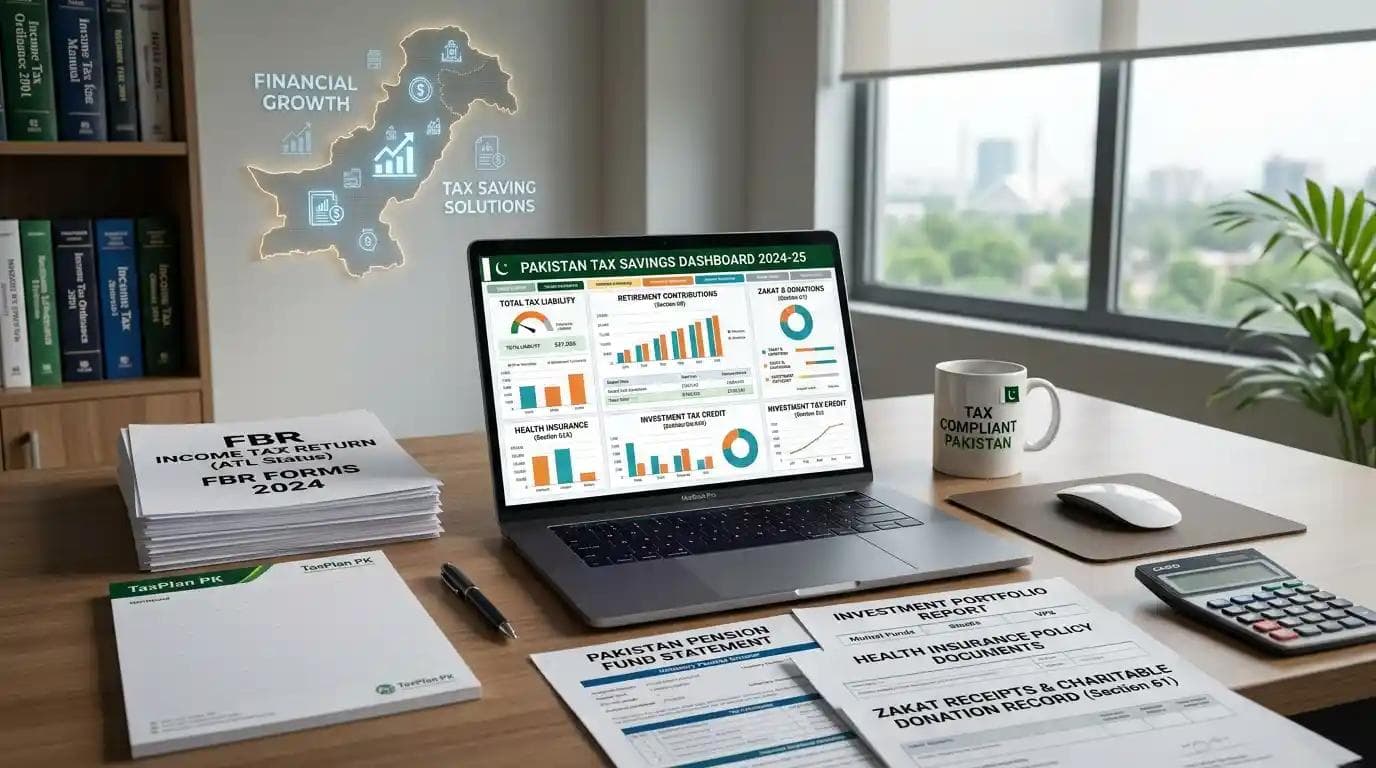
1. Become and Stay an Active Tax Filer
This is the single most impactful step you can take. Filing your income tax return and staying on the FBR's Active Taxpayer List reduces your withholding tax rates on dozens of transactions — from property purchases to bank profits to vehicle registration.
Non-filers pay significantly higher rates across the board. If you've been delaying FBR registration, 2026 is the year to fix that. The process is straightforward through the IRIS portal, and the savings can be substantial even in the first year.
2. Claim Your Tax Credit on Life Insurance Premiums
If you pay premiums on a life insurance policy, you're entitled to a tax credit under Section 62 of the Income Tax Ordinance. The credit applies to premiums paid on your own policy or your spouse's — up to 20% of taxable income or Rs. 2.5 million, whichever is lower.
This means your insurance isn't just protecting your family — it's also directly reducing your tax bill. Many salaried individuals overlook this entirely when filing returns.
3. Invest in a Voluntary Pension Scheme (VPS)
The Voluntary Pension System, regulated by the Securities and Exchange Commission of Pakistan (SECP), allows individuals to contribute to an approved pension fund and claim the full contribution amount as a tax credit.
Under Section 63, contributions to a VPS are eligible for a tax credit of up to 20% of your taxable income (with higher limits for individuals over 40). This is one of the most tax-efficient investments available to individuals in Pakistan, yet most people either don't know it exists or assume it's only for corporate employees.
If you're planning for retirement anyway, doing it through a VPS gives you a double benefit — future income security and immediate tax savings today.
4. Use Mutual Fund Investments Wisely
Investments in SECP-approved mutual funds, particularly equity and pension funds, can also provide tax efficiency. Some mutual fund income enjoys preferential tax treatment, and certain investments qualify under the broader tax credit framework.
Dividend income from mutual funds listed on the Pakistan Stock Exchange is subject to reduced withholding tax rates for active filers compared to non-filers. This gap makes a meaningful difference over time if you're building an investment portfolio.
5. Claim Deductions on Zakat and Charitable Donations
Donations made to government-approved charitable organizations are tax-deductible under Section 61 of the Income Tax Ordinance. The deduction is available for the full amount donated, subject to a maximum of 30% of taxable income.
This is a practical strategy for high-income earners who genuinely support charitable causes. By channeling donations through approved organizations and keeping proper receipts, you reduce your taxable income while contributing to causes you care about.
Automatic Zakat deductions from bank savings accounts are also deductible when filing your return.
6. Declare Rental Income Properly — Then Use Deductions
Many property owners in Pakistan don't declare rental income, which creates significant legal risk as FBR's data matching systems improve. The smarter approach is to declare it correctly and then claim all allowable deductions against it.
Under the Income Tax Ordinance, you can deduct repair and maintenance expenses (up to one-fifth of rent), insurance premiums on the property, and property taxes paid when calculating net rental income. This reduces your taxable rental income significantly compared to the gross amount collected.
7. Plan Your Salary Structure
If you're employed and have flexibility in how your salary is structured, talk to your HR or payroll team about tax-efficient components. Certain allowances — including medical allowances within prescribed limits — carry preferential tax treatment.
Medical reimbursements for actual expenses are generally exempt from tax. House rent allowances have specific treatment depending on whether accommodation is provided by the employer. Understanding these distinctions and structuring your compensation accordingly can reduce monthly withholding tax meaningfully.
8. Maintain a Clean and Accurate Wealth Statement
Filing a complete and accurate wealth statement alongside your income tax return isn't just a legal obligation — it's also good financial hygiene that protects you from FBR notices.
If the FBR notices a discrepancy between your declared income and apparent lifestyle or asset accumulation, you can receive a notice requiring explanation. A well-prepared wealth statement accounts for all your assets, liabilities, and lifestyle expenses in a coherent way. If you ever receive such a notice, knowing what to do if you receive an FBR tax notice can save you considerable stress and expense.
9. Claim Tax Credit for Education Expenses
Tuition fees paid to educational institutions registered with the relevant education authorities qualify for a tax credit under Section 60B. The credit applies to fees paid for yourself, your spouse, and your children.
The amount eligible is up to Rs. 2.5 million or 5% of your taxable income, whichever is lower. For families with children in private schools or universities, this credit can reduce tax liability noticeably.
10. Understand Withholding Tax Adjustments
Throughout the year, withholding tax is deducted from various income sources — salary, bank profits, property transactions, prize bonds, and more. These aren't additional taxes — they're advance payments against your annual tax liability.
When you file your annual tax return, these withholding amounts are adjusted against your total tax due. If withholdings exceed your actual tax liability, you're entitled to a refund. Many individuals who file returns receive refunds precisely because their withholding was higher than necessary.
This is another reason to file returns consistently — you may actually be owed money.
Common Tax Planning Mistakes to Avoid
Not filing at all. The most expensive mistake is assuming you don't need to file if your employer already deducts withholding tax. Filing a return opens up credits, adjustments, and refunds that you'd otherwise forfeit.
Missing the deadline. The annual filing deadline is typically September 30 for individuals. Late filing attracts penalties and — more significantly — removes you from the Active Taxpayer List until the following year's update.
Ignoring available credits. Life insurance, pension contributions, charitable donations, and education fees all carry tax credits that most individuals simply don't claim. Over a decade, unclaimed credits can represent hundreds of thousands of rupees.
Inconsistent wealth statements. Filing a wealth statement that doesn't align with your actual financial position creates audit risk. Be thorough, accurate, and consistent year to year.
Poor record keeping. Tax credits and deductions require supporting documentation. Keep premium payment receipts, charitable donation certificates, and fee payment records organized throughout the year.
Baco Consultants — Professional Tax and Business Advisory in Pakistan

Knowing the rules is one thing. Applying them correctly to your specific situation is another. That's where professional guidance makes a real difference.
Baco Consultants is one of Pakistan's trusted tax and business advisory firms, helping individuals, freelancers, salaried professionals, and business owners navigate the complexities of Pakistan's tax system with confidence.
Their team assists clients with:
- Income tax return filing — accurate, complete, and on time
- Tax planning consultations — personalized strategies based on your income profile
- FBR compliance — registration, Active Taxpayer List maintenance, and notice responses
- Wealth statement preparation — ensuring consistency and legal accuracy
- Business registration and SECP compliance — for those running businesses alongside employment
- Tax credit and deduction optimization — making sure clients claim everything they're entitled to
If you're exploring business structures alongside personal tax planning, Baco Consultants also provides guidance on joint ventures, franchise businesses, and other commercial arrangements that intersect with personal taxation. For a full overview of what's available, explore the services offered by Baco Consultants.
What sets them apart is practical, actionable guidance tailored to Pakistan's regulatory environment — not generic advice that doesn't account for local realities.
Real-World Example
Consider Ahmed, a software engineer in Islamabad earning Rs. 4.5 million annually. Without any tax planning, his income tax liability falls squarely within the applicable tax slab.
After working with a tax consultant, Ahmed takes the following steps: he enrolls in a Voluntary Pension Scheme and contributes Rs. 400,000 annually, pays Rs. 180,000 in life insurance premiums, donates Rs. 150,000 to an FBR-approved charity, and claims Rs. 120,000 in children's tuition fee credits.
Combined, these moves reduce his taxable income and generate tax credits that legally lower his annual tax bill by approximately Rs. 180,000–220,000 — roughly equivalent to two months of additional take-home pay.
None of this involves anything complicated or risky. It just requires knowing what the law allows and acting before the tax year closes.
Frequently Asked Questions
How can I legally save tax in Pakistan as a salaried employee? The most effective methods include claiming tax credits for life insurance premiums, contributing to a Voluntary Pension Scheme, declaring education expenses for children, and ensuring all withholding tax deductions are properly adjusted when filing your annual return with the FBR.
What investments provide tax credits in Pakistan? Life insurance policies (Section 62), contributions to Voluntary Pension Schemes (Section 63), and donations to approved charitable organizations (Section 61) all generate direct tax credits under the Income Tax Ordinance 2001.
Is it worth filing a tax return if my employer deducts withholding tax? Yes, absolutely. Filing your return allows you to claim tax credits you'd otherwise miss, adjust excess withholdings for a potential refund, and maintain Active Taxpayer status — which reduces tax rates on many transactions throughout the year.
What is the difference between a tax credit and a tax deduction in Pakistan? A tax deduction reduces your taxable income before the tax is calculated. A tax credit reduces your actual tax bill directly after calculation. Tax credits are generally more valuable because they lower your liability rupee for rupee.
When is the income tax return deadline in Pakistan? For most individuals, the deadline is September 30 of each year, covering the tax year ending June 30. Late filing attracts a default surcharge and may affect your Active Taxpayer List status.
Can freelancers and consultants also benefit from these tax-saving strategies? Yes. Freelancers and self-employed professionals can claim the same deductions and credits available to salaried individuals, and they also benefit from industry-specific withholding adjustments. Professional guidance is particularly valuable for this group given the complexity of income sources involved.
Conclusion
Paying tax is a legal obligation. Paying more than required is a choice — and it's one you can easily avoid with the right knowledge and a little planning.
The strategies outlined here are all legal, well-established, and available to any individual taxpayer in Pakistan. From investing in a pension scheme to claiming education credits, each step builds toward a lower annual tax bill and stronger financial position.
The key is to plan before the tax year ends, keep your documentation in order, and file your return correctly and on time.
👉 If you need professional assistance with income tax filing, personal tax planning, FBR registration, or business compliance in Pakistan, Baco Consultants is here to guide you every step of the way. Book a consultation today and keep more of what you earn — legally.
Related Articles


Leave a Comment
No approved comments yet. Be the first to share your thoughts!