

Navigating the regulatory landscape in Pakistan has undergone a massive digital transformation. As we move through 2026, the Federal Board of Revenue (FBR) has streamlined the Step-by-Step Business Registration Process in Pakistan and the subsequent tax compliance requirements. Whether you are a startup founder, a seasoned manufacturer, or a digital freelancer, staying "Active" on the Taxpayer List is no longer just a legal formality—it is a competitive advantage.
Filing your sales tax return is the heartbeat of business compliance. It ensures you can claim input tax adjustments, avoid heavy penalties, and maintain a credible reputation with corporate clients. This guide provides a comprehensive, human-centric walkthrough of how to handle your business registration and how to file sales tax return in Pakistan using the latest IRIS 2.0 portal features.
What is Business Registration and Sales Tax Filing?
At its core, business registration is the legal birth of your enterprise. In Pakistan, this usually involves obtaining a National Tax Number (NTN) from the FBR and, for companies, registering with the Securities and Exchange Commission of Pakistan (SECP).
Sales Tax Filing, on the other hand, is the monthly process of reporting your business transactions to the government. Under the Sales Tax Act 1990, businesses acting as "withholding agents" or those providing taxable goods and services must submit a monthly declaration. This declaration detail your output tax (tax you collected from customers) and your input tax (tax you paid to suppliers). The difference is what you pay to the national exchequer.
Why It Is Important for Businesses in Pakistan in 2026
The Pakistani economy in 2026 is strictly documented. The "Non-Filer" concept is being phased out in favor of high-compliance costs for those outside the net. Here is why compliance matters:
- Avoidance of Penalties: The penalty for late filing of sales tax return in Pakistan has increased. Failing to file can lead to the suspension of your STRN (Sales Tax Registration Number).
- Input Tax Credit: If you aren't registered or filing, you cannot claim back the tax you paid on raw materials or utilities, effectively increasing your costs by 18% or more.
- Government Tenders: To bid for any provincial or federal contract in cities like Islamabad, Lahore, or Karachi, being an active taxpayer is a mandatory prerequisite.
- Banking & Credit: Banks now use FBR compliance data to determine the creditworthiness of small businesses and startups.
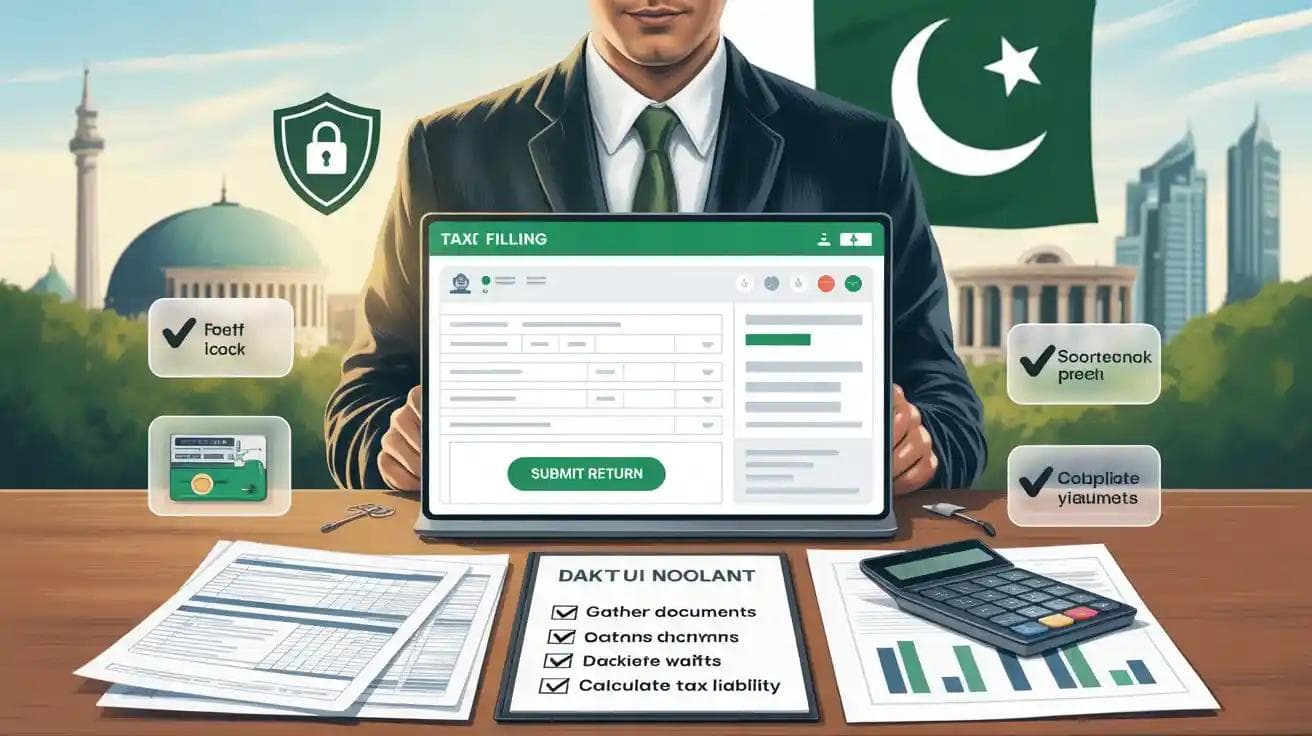
Key Requirements and Tools for Registration
Before you begin the FBR sales tax return filing procedure, you need to ensure your "digital briefcase" is ready. In 2026, the IRIS portal is more integrated than ever, requiring specific documentation.
Essential Documents & Credentials
- NTN & STRN: Your National Tax Number and Sales Tax Registration Number.
- IRIS Login Credentials: Your CNIC and password for the FBR portal.
- Business Bank Account: Necessary for linking with the e-filing system.
- Utility Bills: Recent electricity or gas bills for the registered business premises.
- Digital Signature/PIN: For final submission of the return.
Digital Tools
- IRIS 2.0 Portal: The primary interface for all sales tax return IRIS Pakistan activities.
- FBR Maloomat App: Excellent for checking your tax credits and withholding data on the go.
- Excel/Accounting Software: Essential for preparing your Annexures (Annex-A for purchases, Annex-C for sales).
Step-by-Step Business Registration Process in Pakistan 2026
If you are starting fresh, follow this workflow to get your business legally recognized and ready for tax filing.
Step 1: Decide Your Business Structure
Choose between a Sole Proprietorship, Partnership (AOP), or a Private Limited Company. For companies, you must first register with the SECP before approaching the FBR.
Step 2: Obtain an NTN
Visit the IRIS portal and register as a new taxpayer. You will provide your CNIC, cell phone number (registered in your name), and email. For businesses, you will add the "Business" tab and provide the category (e.g., Retailer, Manufacturer, Service Provider).
Step 3: Apply for Sales Tax Registration (STRN)
Not every business needs an STRN, but if your turnover exceeds the threshold or you are an importer/exporter, it’s mandatory. This involves:
- Uploading photos of the business premises.
- Uploading the GPS-tagged biometric verification via the "Tax Asaan" app.
- Linking your bank account within 30 days of registration.
Step 4: Understanding the Tax Period
In Pakistan, the monthly sales tax return follows the calendar month. For example, the return for January 2026 is typically due by the 15th (for the return) and the 18th (for the payment) of February 2026.

How to File Sales Tax Return in Pakistan: The IRIS Guide
Filing a sales tax return Pakistan 2026 is now a modular process. You don't just fill out one form; you complete "Annexures" that build your final return.
1. Data Entry in Annexures
- Annexure A (Purchases): This is where you claim input tax adjustment. Most data now "auto-populates" because your suppliers have already reported selling to you. You simply need to "Accept" or "Claim" these invoices.
- Annexure C (Sales): This is the most crucial part. You enter all your sales invoices here. The system calculates the output tax automatically based on the current tax rate (e.g., 18%).
- Annexure H (Refunds/Exports): If you are an exporter, you must fill annex h of sales tax return to claim your zero-rated refunds.
2. Tax Liability Calculation
Once the annexures are loaded, go to the "Total" or "Calculation" tab. The system will subtract your Input Tax from your Output Tax.
Formula: $Output Tax - Input Tax = Payable Sales Tax$
3. Generating the Challan
If you have a tax liability, you must generate a PSID (Payment Slip ID) within the IRIS portal, pay it via ATM or Online Banking, and then "Attach" the payment to your return.
4. Verification and Submission
Enter your 4-digit PIN and click "Submit." Ensure you do this before the sales tax return due date Pakistan 2026 to avoid the automatic system-generated penalty.
Common Mistakes to Avoid
Even seasoned accountants sometimes stumble. To ensure a 100/100 readability and compliance score, avoid these pitfalls:
- Ignoring the Due Date: Many think the 15th is a "suggestion." It is a hard deadline. Missing it results in a minimum penalty of PKR 10,000 (subject to 2026 budget updates).
- Incorrect Annexure Mapping: Placing local purchases in the import column or vice-versa will lead to a mismatch and potential FBR audit.
- Forgetting "Nil" Returns: Even if you had zero business activity this month, you must file a nil sales tax return. Failure to do so will result in your name being removed from the Active Taxpayer List (ATL).
- Inconsistent Bank Records: Ensure the sales reported in IRIS match the credits in your business bank account. Discrepancies are a major red flag for tax inspectors.
Why Choose Baco Consultants for Your Tax Needs?
The complexities of the Sales Tax Act 1990 and the evolving IRIS portal can be overwhelming for business owners who should be focusing on growth, not paperwork. This is where professional expertise becomes invaluable.
Baco Consultants is a premier firm specializing in navigating the FBR and SECP ecosystems. Here is why businesses trust them:
- Expert Consultants: Our team includes seasoned CAs and tax lawyers who understand the nuances of taxation and compliance.
- Fast Processing: We ensure your STRN registration and monthly filings are done with 100% accuracy and zero delays.
- Strategic Tax Planning: We don't just file; we help you optimize your input tax adjustments to legally minimize your tax liability.
- Comprehensive Support: From initial company registration to handling FBR audits, we are your end-to-end partners.
If you are looking for a dedicated team to handle your financial compliance, contact us today to secure your business's future. You can also explore more insights on our official blog.
Real-World Example: The "Tech-Gear" Startup
Consider "Tech-Gear," a small hardware startup in Lahore. In January, they bought PKR 1,000,000 worth of components (paying PKR 180,000 in input tax). They sold the finished products for PKR 1,500,000 (collecting PKR 270,000 in output tax).
By using the FBR e-filing system, Tech-Gear's accountant filed the return on the 12th of the month. They adjusted the PKR 180,000 they already paid against the PKR 270,000 they collected. Consequently, they only paid PKR 90,000 to the FBR. Because they filed on time, they remained "Active" on the ATL, allowing them to secure a new contract with a government department the following week.

Frequently Asked Questions (FAQs)
1. How to file sales tax return in Pakistan for a nil period?
Log in to IRIS, select the relevant tax period, and click on the "Nil Return" button. The system will automatically check if there are any recorded purchases against your CNIC/NTN. If clear, you can verify with your PIN and submit.
2. What is the due date of sales tax return in Pakistan 2026?
Typically, the sales tax return must be filed by the 15th of every month for the previous month's activity. However, if the 15th falls on a weekend or public holiday, the FBR usually extends the date by a few days.
3. What is STRN in Pakistan and why do I need it?
STRN stands for Sales Tax Registration Number. It is a unique 13-digit number issued by the FBR. You need it to issue sales tax invoices, claim input tax, and conduct international trade.
4. Can I revise a sales tax return after submission?
Yes, you can revise sales tax return in Pakistan through the IRIS portal. However, you must apply for "Revision" and provide a valid reason. If the revision results in less tax paid, it may require approval from the Commissioner.
5. What are the penalties for late filing in 2026?
Late filing can result in a penalty starting from PKR 10,000. Additionally, for every day the tax remains unpaid, a "default surcharge" (interest) is applied. Persistent non-compliance can lead to "Blacklisting."
Conclusion & Call to Action
Mastering the Step-by-Step Business Registration Process in Pakistan 2026 is the first step toward building a sustainable and scalable business. While the digital tools provided by the FBR, such as the IRIS portal, have made the process more accessible, the legal intricacies of sales tax return filing still require a professional touch to ensure 100% compliance and maximum tax efficiency.
Don't let tax notices and penalties hinder your business growth. Whether you need help with how to calculate sales tax or want to outsource your entire monthly filing process, the experts are here to help.
Ready to streamline your business compliance? Book a consultation at Advance Services offered by Baco Consultants today. Let us handle the FBR while you handle your business.
For more information on regulatory standards, you can also visit the ICT Pakistan portal or check out educational resources at ICT Courses.
Related Articles


Leave a Comment
No approved comments yet. Be the first to share your thoughts!