
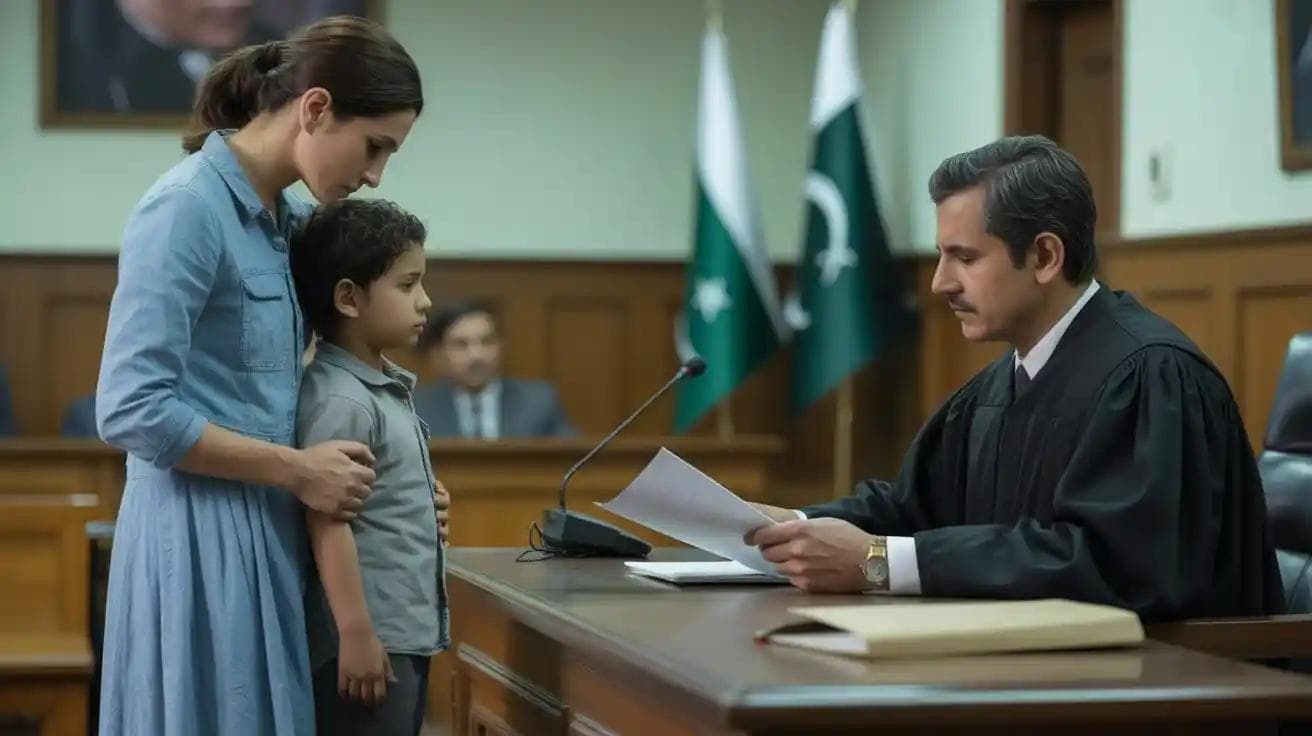
When a marriage ends or parents separate, the emotional fallout is immediate and visible. But the practical question that follows — and that cannot wait — is this: who is legally responsible for paying for the children?
In Pakistan, this question has a clear, well-established answer rooted in both statutory legislation and Islamic jurisprudence. But despite the clarity of the law, thousands of families across the country face situations where maintenance is being refused, underpaid, or disputed — leaving children without the financial support they are legally entitled to receive.
This complete 2026 guide by Baco Consultants explains exactly who bears legal responsibility for child maintenance in Pakistan, what the law says about each parent's obligations, when and how that responsibility can extend to other relatives, and what your legal options are when a father refuses to pay.
What Is Child Maintenance Under Pakistani Law?
Child maintenance is the regular, legally enforceable financial support provided for a minor child's essential needs — covering food, clothing, education, shelter, healthcare, and general upbringing. It is not a voluntary contribution. It is a legal obligation that Pakistani courts can compel, enforce, and punish non-compliance with.
Child maintenance in Pakistan is governed by four primary legal instruments. The Muslim Family Laws Ordinance 1961 is the foundational legislation governing Muslim family financial obligations including child support. The West Pakistan Family Courts Act 1964 establishes the Family Court's exclusive jurisdiction over maintenance disputes. The Guardians and Wards Act 1890 provides for the financial protection of minors within the guardianship framework. And Muslim Personal Law through the Shariat Application Act 1962 applies Islamic principles of nafaqah — financial provision — to parental obligations.
Nafaqah is the theological and legal foundation beneath every child maintenance case in Pakistan. Under Islamic law, nafaqah is the father's religious and legal duty to financially provide for his children — regardless of his personal relationship with the mother, regardless of custody arrangements, and regardless of personal circumstances unless there is genuine, permanent incapacity. Pakistani courts apply this principle through the legislative framework above, creating one of the most clearly defined areas of family law in the country.
Who Is Legally Responsible for Child Maintenance in Pakistan?
The Father — Primary and Non-Negotiable Legal Responsibility
Under Pakistani law and Islamic personal law, the father is the primary person legally responsible for paying child maintenance. This is not a conditional or circumstantial obligation. It is absolute, non-negotiable, and enforceable through the Family Court system.
The father's maintenance obligation does not diminish or disappear based on whether the parents are divorced or separated, whether the father has physical custody of the child, whether the mother is financially independent or even wealthy, whether the father has remarried, or whether the father disputes his relationship with the child — until paternity is formally disproved through court process.
The father's financial responsibility covers every essential dimension of the child's life: school fees and educational expenses, daily food and clothing, medical treatment and healthcare, housing, and any special needs the child has. The Supreme Court of Pakistan has repeatedly affirmed in its judgments that a father's financial duty to his minor children is absolute and cannot be evaded without lawful and proven cause.
For families seeking professional legal support in asserting or enforcing this obligation, Baco Consultants provides specialist family law consultancy with direct experience before Family Courts in Lahore, Karachi, Islamabad, and Rawalpindi.
When Does the Father's Responsibility End?
The duration of the father's maintenance obligation depends on the child's gender and circumstances — a distinction that many people are not aware of.
For sons, the obligation continues until the son reaches puberty or becomes financially self-sufficient — generally until approximately 18 years of age as the recognized age of majority. Courts may extend this where the son remains genuinely dependent due to ongoing higher education or a disability that prevents financial independence.
For daughters, the obligation is substantially more protective. An unmarried daughter retains her right to maintenance from her father regardless of her age. The obligation ends when she marries — at which point responsibility transfers to her husband. A 25-year-old, 30-year-old, or 35-year-old unmarried daughter has the same legal right to maintenance from her father as a 10-year-old does. This is one of the most misunderstood provisions of Pakistani family law.
For children with permanent physical or mental disabilities, the father's maintenance obligation continues for the child's entire life, regardless of age or gender. The disability eliminates the financial independence endpoint that would otherwise apply.
The Mother — Secondary and Conditional Responsibility Only
Under both Pakistani statutory law and Islamic jurisprudence, the mother is generally not obligated to financially maintain her children if the father is alive, present, and capable of earning. The mother's primary legal role is to provide care, nurturing, and physical upbringing — not financial provision.
The mother may bear financial responsibility in a narrow set of exceptional circumstances: if the father is deceased and there is no estate or inheritance from which to draw maintenance, if the father is permanently disabled and genuinely incapable of any income-generating activity, if the father is completely untraceable despite all reasonable efforts to locate him, or if the mother has voluntarily assumed financial responsibility through a written court agreement or settlement.
Even in these exceptional cases, Pakistani courts follow an established hierarchy — looking first at other paternal male relatives before placing the financial burden on the mother.
Paternal Relatives — The Legal Hierarchy of Responsibility
Under Islamic law as applied in Pakistani courts, the hierarchy of financial responsibility for a child's maintenance follows a defined order when the father is unavailable. The paternal grandfather bears secondary responsibility if the father is deceased or genuinely incapacitated. Other paternal male relatives are considered next in the complete absence of the paternal grandfather. Maternal relatives are considered when no paternal family is available. And the mother is the absolute last resort when no other responsible party exists or can be identified.
This hierarchy ensures that every minor child in Pakistan has a legally identifiable person responsible for their financial support — regardless of how complex or fractured the family situation has become.
Child Maintenance Responsibility After Divorce in Pakistan
This is one of the most frequently misunderstood aspects of child maintenance law in Pakistan, and it causes enormous harm to children when parents operate on false assumptions.
Divorce does not end the father's maintenance obligation. This statement cannot be stated strongly enough. After divorce, the father must continue paying monthly maintenance for all minor children regardless of which parent has custody, regardless of how acrimonious the separation was, and regardless of any informal arrangements or verbal agreements made between the parties.
If the mother has custody of the children, the father pays maintenance directly to the mother as the children's caretaker. If the father has custody, he directly bears all the child's expenses — in which case there is no separate maintenance payment since he carries all costs himself. In either custody arrangement, the financial obligation exists and can be enforced.
Another critically important point: custody and child maintenance are entirely separate legal matters in Pakistan. A father who has reduced visitation, no visitation, or zero contact with his children remains fully liable for monthly maintenance. A father who voluntarily gives up custody does not reduce his maintenance obligation by doing so. The two issues are legally independent and are decided through separate proceedings.
The services offered by Baco Consultants include complete child maintenance case management — from petition drafting and initial filing through to final court order and enforcement proceedings where required.
Key Legal Provisions Establishing Child Maintenance Responsibility
Understanding the specific legal provisions that create and enforce child maintenance responsibility in Pakistan helps families and professionals alike understand the strength of these obligations.
Section 17A of the West Pakistan Family Courts Act 1964 grants the Family Court the power to issue maintenance orders and enforce them through attachment of property, salary, or bank accounts. The Muslim Family Laws Ordinance 1961 establishes the comprehensive framework for financial obligations within Muslim families including the father's absolute duty toward minor children. Section 488 of the Code of Criminal Procedure 1898 provides an additional criminal remedy — allowing a Judicial Magistrate to order maintenance payments and impose penalties for non-compliance when a person with means neglects or refuses to support their children. And Section 25 of the Guardians and Wards Act 1890 enables a guardian of a minor to approach the court directly for financial support for the minor's welfare.
Together, these provisions create one of the most comprehensive and enforceable child financial protection frameworks in South Asian family law. The challenge is not the law — it is ensuring families know how to activate and use it effectively.
How Pakistani Family Courts Determine Maintenance Amounts
When a maintenance case is filed in Family Court, the judge does not accept the claimed amount automatically or set a maintenance level arbitrarily. The court assesses both the legal responsibility and the appropriate quantum based on a structured analysis of multiple factors.
The father's proven monthly income and total financial capacity — established through salary slips, bank statements, tax returns, and business records — is the primary factor. Courts are not limited to what the father voluntarily discloses. They have the authority to order the production of financial documents, and professional legal representation is critical to ensuring complete financial disclosure is achieved.
The child's actual documented monthly expenses — school fees, tutoring, medical costs, food, clothing, and transport — provide the practical baseline for what maintenance must cover. The standard of living the child was accustomed to before the separation informs the appropriate level. The total number of dependent children affects the proportional calculation. And any special needs, health conditions, or educational circumstances of individual children are factored into the final determination.
Pakistani Family Courts typically work from a benchmark of 10% to 25% of the father's proven monthly income per child, adjusted upward or downward based on the specific facts. There is no statutory maximum — courts have awarded amounts substantially above this range in cases involving high-income fathers with children whose genuine needs and established lifestyle justify higher support.
For professional guidance on calculating and documenting a realistic maintenance claim that reflects your child's genuine needs, the expert team at Baco Consultants can assess your specific situation and build the strongest possible evidentiary case.
For free tools to support expense documentation, financial calculation, and case preparation, MegaFreeTools offers a practical library of utilities at megafreetools.com/tools that can support your preparation at no cost.
What Happens When a Father Refuses to Pay Child Maintenance?
Refusal to pay court-ordered child maintenance is not a family dispute that courts treat lightly. It is contempt of a court order with serious legal consequences.
Filing an execution petition in the same Family Court that issued the maintenance order is the immediate enforcement step. Once filed, the court has authority to attach the father's salary directly through his employer, freeze and recover funds from his bank accounts, seize and sell movable or immovable property to recover outstanding arrears, and issue an arrest warrant for contempt of the court's order.
Recovery of arrears — all overdue maintenance — can be pursued through successive execution applications, typically recovering up to one year of arrears at a time. The compounding nature of arrears recovery means that a father who delays payment faces an increasingly significant financial enforcement action over time.
A criminal complaint under Section 488 of the Code of Criminal Procedure 1898 is also available — allowing a Judicial Magistrate to order maintenance and impose criminal penalties for willful, persistent refusal. In extreme cases where a father has deliberately abandoned his children with no support whatsoever, law enforcement involvement is also a legal possibility.
The enforcement mechanisms under Pakistani family law are genuinely powerful. What weakens enforcement in practice is not the law — it is the absence of professional legal support actively pursuing it. This is exactly the difference that Baco Consultants provides to families across Pakistan. To learn more about the expertise and track record behind these outcomes, visit bacoconsultants.com/about.
A mother in Karachi separated from her husband after seven years of marriage. She had custody of their two children — a 6-year-old son and a 9-year-old daughter. The father, a salaried professional earning PKR 150,000 per month, offered PKR 5,000 per child per month and refused to increase this amount, claiming financial constraints.
After engaging Baco Consultants, a maintenance case was filed immediately in the Karachi Family Court accompanied by an interim maintenance application. The legal team obtained the father's salary certificate through court process and submitted a detailed, itemized breakdown of the children's actual monthly expenses totaling PKR 45,000.
Within three hearings, the court granted interim maintenance of PKR 20,000 per child. Following the full evidence stage, the court issued a final order of PKR 22,000 per child per month — nearly nine times the amount the father had initially offered.
When the father missed two consecutive payments, an execution petition was filed immediately. The court attached his salary account and recovered the full arrears within days.
This outcome illustrates what the law provides and what professional representation delivers. The legal right existed from the beginning. What converted it into actual financial support for two children was the correct legal process, complete evidence, and active enforcement.
Build Professional Knowledge in Pakistani Family Law and Taxation
For legal professionals, accountants, business consultants, and students who want to develop genuine expertise in Pakistani law, corporate compliance, and taxation, the Institute of Corporate and Taxation (ICT) offers professional courses designed around real-world application in Pakistan's legal and business environment.
Their programs build the practical, career-ready knowledge that working in Pakistani law and corporate finance genuinely demands — not theoretical frameworks, but functional expertise applicable to actual professional situations. Browse the complete course catalog at ict.net.pk/courses to find the program that aligns with your professional development goals.
Common Mistakes That Undermine Child Maintenance Claims in Pakistan
Assuming divorce ends the father's obligation is the most damaging misconception in Pakistani child maintenance law. It does not. The obligation continues in full after divorce regardless of custody arrangements or the circumstances of the separation.
Confusing child maintenance with alimony leads families to conflate two entirely separate legal rights. Alimony — the wife's maintenance after divorce — and child maintenance are independent claims with different legal bases, different calculations, and different durations. They are often filed together but decided separately.
Not documenting the father's income thoroughly is the most consequential evidentiary weakness in maintenance cases. Without credible financial evidence of the father's actual income, courts default to conservative assessments. Salary slips, bank statements, tax returns, and business records are essential.
Waiting too long to file is costly in a very direct way. Courts award maintenance from the date the petition is filed — not from the date the father stopped paying. Every month of delay is maintenance money the child will never recover. File as early as possible.
Accepting verbal promises instead of court orders provides zero legal protection. A father's informal promise to pay has no enforceability. Only a written, court-issued maintenance order can be enforced through the Family Court's execution mechanisms.
Going to Family Court without professional legal representation consistently produces worse outcomes than represented cases — both in the maintenance amount awarded and the time required to achieve enforcement. The technical, evidence-based nature of Family Court proceedings requires professional advocacy.
Frequently Asked Questions About Child Maintenance Responsibility in Pakistan
Who is legally responsible for child maintenance in Pakistan? The father is the primary person legally responsible for child maintenance in Pakistan under both statutory family law and Islamic personal law. This obligation is absolute and exists regardless of custody arrangements, marital status, or the mother's financial situation.
Is the mother ever legally responsible for child maintenance in Pakistan? Generally no. Under Pakistani law and Islamic jurisprudence, the mother is not obligated to financially maintain the children if the father is alive and capable of earning. She may bear financial responsibility only in exceptional circumstances — if the father is deceased, permanently disabled, or completely untraceable — and only after all paternal relatives have been considered.
Does the father's maintenance responsibility end after divorce? No. Divorce does not end the father's maintenance obligation in any way. He must continue paying monthly child support for all minor children after divorce, regardless of which parent has custody and regardless of the circumstances of the separation.
What is nafaqah and how does it apply in Pakistani child maintenance law? Nafaqah is the Islamic concept of financial provision, establishing the father's religious and legal duty to financially provide for his children's essential needs. Pakistani family courts apply this principle through the Muslim Family Laws Ordinance 1961 and related legislation, making it the theological and legal foundation of child maintenance law in Pakistan.
What can a mother do if the father refuses to pay maintenance in Pakistan? She can file a maintenance case in the Family Court. If a court order already exists and the father defaults, an execution petition is filed immediately. The court can attach his salary, bank accounts, or property, issue an arrest warrant for contempt, and recover all arrears through enforcement proceedings.
Can a working mother's income reduce the father's maintenance obligation? No. Under Pakistani law, a mother's employment or income does not reduce the father's maintenance obligation. The father's duty is independent and absolute. Pakistani courts do not factor the mother's income into child maintenance calculations.
Until what age must a father pay child maintenance in Pakistan? For sons, until puberty or financial independence — generally until 18 years, with possible extensions for ongoing education. For daughters, until marriage regardless of age. For children with permanent disabilities, the obligation continues for the child's entire life.
Can both parents be jointly held responsible for child maintenance? Under standard Pakistani law, the answer is no — the father bears primary and full responsibility. Courts will explore other paternal relatives before placing any financial obligation on the mother. Only in the most exceptional circumstances, when no paternal support is available from any source, will courts consider the mother's financial capacity.
Conclusion — The Law Is Clear: Assert It and Enforce It
The question of who is responsible for child maintenance in Pakistan has one clear, consistent, and legally well-established answer: the father bears primary and full legal responsibility for financially supporting his minor children — during marriage, after divorce, with or without custody, and regardless of the mother's financial situation.
Pakistani family law, grounded in Islamic principles of nafaqah and codified through robust statutory legislation, creates an enforceable framework that protects every child's right to financial support. The legal tools to compel compliance — from interim maintenance orders and execution petitions to arrest warrants and criminal complaints — are available and effective when professionally deployed.
If you are a mother, guardian, or family member whose child's maintenance rights are being denied, underpaid, or disputed, the most important thing you can do is act promptly, document thoroughly, and seek professional legal representation from the beginning.
For expert family law consultancy, child maintenance petition filing, interim maintenance applications, and enforcement proceedings across Pakistan, Baco Consultants is ready to assess your case and secure the financial support your children are entitled to — professionally, efficiently, and affordably. Explore the complete range of services at bacoconsultants.com/services.
For legal and financial professionals building deeper expertise in Pakistani law, corporate compliance, and taxation, ICT — the Institute of Corporate and Taxation offers expert-designed courses at ict.net.pk/courses that build the practical knowledge your career demands.
Your child's financial rights exist in law. Ensure they exist in practice — starting today.
Related Articles


Leave a Comment
No approved comments yet. Be the first to share your thoughts!